Shoulder & Elbow Surgery Specialist
Advanced Orthopedics & Sports Medicine
Tel: 702-740-5327
7195 Advanced Way, Las Vegas, NV 89113
REVISION SHOULDER ARTHROPLASTY
Expert care when a previous shoulder replacement needs further treatment
Shoulder replacement can relieve pain and improve everyday function, but some replacements develop problems over time. If your replaced shoulder becomes painful, weak, stiff, or unstable, a careful evaluation can help identify the cause and determine the next step.
Dr. Kim specializes in complex revision shoulder replacement, providing individualized care for patients whose previous shoulder replacement is no longer working well.
What Is Revision Shoulder Arthroplasty?
Revision shoulder arthroplasty, also called revision shoulder replacement, is surgery to repair or replace part or all of an existing shoulder replacement. It may also involve rebuilding damaged bone or repairing the muscles and tendons that support the joint.
The goal is to address the underlying problem, reduce pain, and improve shoulder stability and function. The procedure is tailored to each patient because no two revision cases are exactly alike.
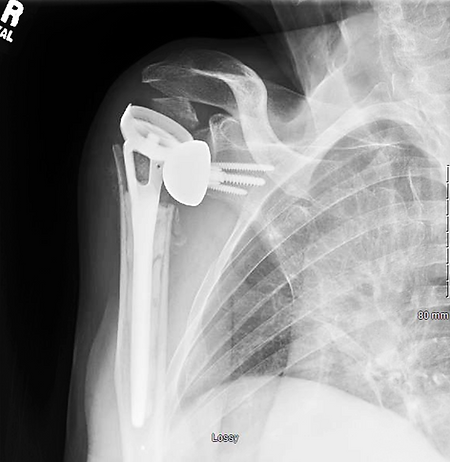
X-ray of dislocated reverse shoulder replacement in a patient. This patient required revision surgery to keep his shoulder replacement stable and underwent the procedure successfully without further dislocations.
Why Might a Shoulder Replacement Need Revision?
Common reasons include:
-
Implant loosening or wear: The artificial joint parts may wear down or become loose, causing pain and difficulty using the arm.
-
Rotator cuff damage: The tendons that help lift and stabilize the shoulder may tear or weaken, affecting how the replacement works.
-
Instability or dislocation: The joint may feel as though it slips, shifts, or comes out of place.
-
Infection: Bacteria around the replacement can cause pain, stiffness, or loosening. Some shoulder infections develop slowly without fever or obvious redness.
-
Fractures: A broken bone around the implant may affect its support and stability.
-
Problems with implant position or fit: These can interfere with comfortable movement and joint function.
Persistent pain or stiffness deserves evaluation, but it does not automatically mean another replacement is necessary.
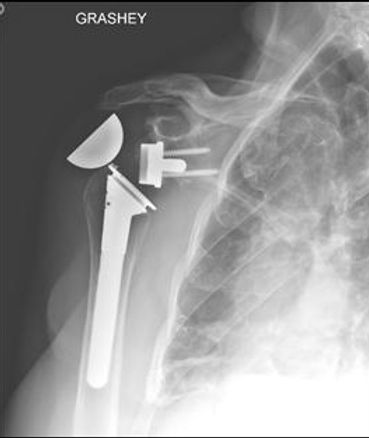
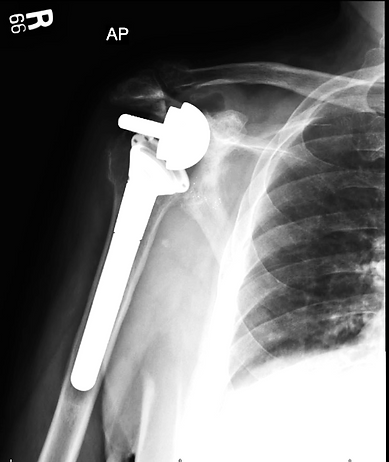
Examples of failed reverse shoulder replacement due to a dislodged ball part (glenosphere) (Left panel) and a dislodged baseplate (Right panel). Both patients required revision replacement and underwent the procedure successfully.
What Other Conditions Can Affect Treatment?
Patients needing revision surgery may also have bone loss, osteoporosis, scar tissue, or damaged tendons. These problems can make it more difficult to secure a new implant and restore movement.
The shoulder’s muscle and nerve function also matters. General health conditions, such as diabetes, can influence surgical planning and recovery. Understanding the whole picture helps determine which treatment offers the best chance of improvement.
Why Is Revision Surgery More Challenging?
Revision surgery is usually more complex than a first shoulder replacement. Previous surgery changes the tissues around the joint, and scar tissue can make access more difficult. Removing existing implants requires care to preserve the remaining bone and protect nearby muscles and nerves. There is often a significant amount of bone missing in the humerus (upper arm bone) and glenoid (the socket side of the shoulder joint), which makes it challenging to perform another replacement.
Some patients need bone grafts or specialized implants to rebuild the joint. Others require treatment for infection or reconstruction of damaged tendons. Identifying why the original replacement is failing is essential to planning an effective revision.
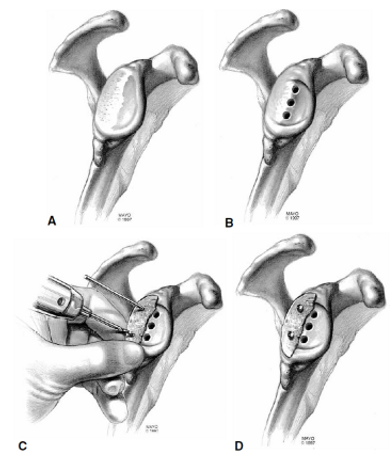
A bone graft is being used to make up for bone loss in the glenoid (the socket side of the shoulder joint) during anatomic total shoulder arthroplasty. A bone graft can be from patient’s own bone (autograft) or from a donor (allograft).
Why Choose a Shoulder and Elbow Specialist?
Shoulder and elbow fellowship trained specialists with experience in revision arthroplasty are particularly well positioned to manage these procedures. Their focused expertise includes shoulder anatomy, replacement implants, rotator cuff problems, bone loss, and complex reconstruction.
This experience helps them evaluate how the implant, bone, muscles, and tendons work together—and choose a treatment that addresses the cause of the problem. Advanced imaging and, when appropriate, three-dimensional planning can help prepare for difficult reconstructions.
When choosing a surgeon, experience with revision shoulder replacement is especially important.
What Does the Procedure Involve?
Treatment begins with a review of your symptoms, previous surgery, and goals, followed by an examination and imaging. Testing for infection may include blood tests, a sample of joint fluid, or tissue samples.
Depending on the findings, surgery may involve:
-
Replacing loose, worn, or poorly positioned implant parts.
-
Keeping well-functioning parts when appropriate.
-
Rebuilding areas of bone loss with bone grafts or specialized implants.
-
Repairing or reconstructing damaged tendons.
-
Converting a traditional replacement to a reverse shoulder replacement, which allows the large outer shoulder muscle to help lift the arm when the rotator cuff cannot function adequately.
If infection is present, treatment includes surgical cleaning and antibiotics. In some cases, the implants are replaced in one operation (one-stage revision); in others, treatment requires two separate stages (two-stage revision), performed 3-4 months apart.
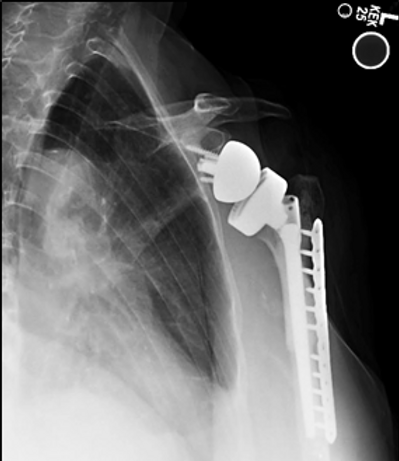
Patient shoulder x-ray showing revision shoulder replacement for a patient with significant bone loss in the humerus (upper arm bone) due to a humerus fracture following a reverse shoulder replacement. A cadaver bone graft was used to make up for the bone loss, and a metal plate and screws were used for fixation of the graft.
Dr. Kim’s Experience and Approach
Revision shoulder arthroplasty is one of Dr. Kim’s areas of surgical expertise. He has been performing these complex procedures with a high success rate for more than 15 years, emphasizing careful evaluation, individualized surgical planning, and attentive follow-up care.
Dr. Kim’s goal is to help patients achieve meaningful pain relief and better shoulder function while setting realistic expectations. Each patient’s outlook depends on the reason for revision, the condition of the bone and surrounding tissues, and overall health.
Recovery and Expected Results
Recovery usually involves a sling, a period of protecting the shoulder, and a tailored rehabilitation program. It may take longer than recovery from a first shoulder replacement.
Many patients experience improved pain and function, although full movement and strength may not return. Revision surgery also carries higher risks than an initial replacement, including infection, dislocation, fracture, nerve injury, and the possibility of further surgery. Dr. Kim will explain what improvement is realistic for your particular shoulder.
Schedule an Evaluation
If you have ongoing pain, weakness, stiffness, or instability after shoulder replacement, schedule a consultation with Dr. Kim. A thorough evaluation can help you understand the problem and explore the treatment options best suited to your needs.